
Showing posts with label aesthetics. Show all posts
Showing posts with label aesthetics. Show all posts
Sunday, 5 March 2023

Wednesday, 21 October 2015
How to Bulk Without Sacrificing Health as a Natural Bodybuilder.
Before starting, lets just get one thing straight. As a natural bodybuilder/strength enthusiast excess calories need to be consumed to get stronger and bigger. Staying ultra lean all year round will not allow for you to continually put on muscle mass, unless your relatively new to training. Short terms gains in muscle mass/strength can occur whilst extremely lean if the trainee is perhaps switching from a very poor training methodology to a more efficient style with much greater intensity and time spent in the gym. No doubt this will lead to some impressive gains irrespective of leanness. However, for anyone who has been training for quite some time and training relatively hard/efficiently, excess calories will be essential in providing the fuel to train heavier/harder/longer and gain muscle tissue.
Bulking is essentially eating over-eating on purpose. Your TDEE (total daily energy expenditure) is made up of your BMR (Basal metabolic rate - kcal your body burns at rest) and any extra calories used from daily activities. You will burn the least amount of calories sleeping. Of course this fluctuates constantly depending on your activities (the BMR will also fluctuate slightly). To bulk effectively, one must consume more calories than the amount of the calories utilised from the TDEE on a daily basis. This will cause weight gain, how much of it and how fast will be determined by how much the calories consumed exceeds the TDEE by. The type of activities completed on a daily basis will contribute to the sort of bodyweight gained (fat or muscle or both). Obviously laying in bed all day whilst overeating will cause fat gain and minimal, perhaps even negative muscle gain. Weight training whilst overeating will cause muscle gain and fat gain (inevitable as a natural). How much muscle one can gain will be determined the quality of training (routine/volume/intensity/rest/technique will all play a part) as well as genetics, age and gender. The amount of calories consumed over the TDEE will also decide the amount of fat gained. Inevitably, a 1000kcal surplus will cause substantial fat gain over a period of weeks. Try shooting for between 200-400 and adjust accordingly as you go.
This is more food than most people realise. Your not going to achieve this by eating chicken salad and weightwatchers meal replacement bars. Serious amounts of food need to be consumed on a DAILY basis. More often than not its easier to get to these calories by eating high calorie, processed junk food to supplement your daily intake. Its easy to eat and the kcal rack up quickly. However, if this is done for months on it can negatively effect health, which will of course only hinder you in the long term. The human body will not function as efficiently; its ability to produce muscle mass will be hindered. Not to mention ailments/disorders that can develop as a result of continued poor diet. To maintain good overall health whilst consuming high amounts of calories on a daily basis I would do the following:
Increase the portion of calories that will come from fat sources. Prioritise mostly unprocessed fats within this. Avocados, good quality olive oil, nuts and seeds, nut butters, oily and fatty fish, eggs and some read meat. This will help bulk the calories out without having to eat too much food volume (1g of fat contains 9 calories compared to only 4 in carb and protein sources). Fat macros should be much higher when bulking than cutting.
Protein shouldn't be excessively high. Copious amounts of meat consumed for long periods of time will not benefit the body's health. I don't think its as much meat, as the quality of meat and the health of the animal it comes from these days. Animals are pumped full of drugs to aid growth and stop diseases killing them before they reach full size. Dairy is much the same, try to limit the quantities consumed as it comes from the same, sick animals. I think 2-2.5g per kilo should be completely adequate. If money is no option buy organic and consume some lean sources and some fattier sources of meat, chicken thighs, red mince meat, oxtail, salmon and mackerel, eggs etc. Vegan protein powders can also be utilised to bulk up protein consumption without worrying about any more diary, sugars and chemicals in your system than what your already eating in your whole foods.
Carbohydrates should be high to fuel long and hard training sessions. Eat plenty of fresh fruit, bear in mind some will not give you many calories. Bananas are dense and stacked full of carbohydrates. Fresh fruit juice can help (not from concentrate or with added sugars). Utilise dried fruits, such as dates, figs and apricots (dates especially high in carbs) to really bulk up your carb consumption. Use processed bread sparingly, although easy to consume it can cause skin/digestive problems if its relied upon solely to bring in carbohydrate calories. Basics such as sweet potato, rice and oats work well. Vegetables should be eaten freely and often. This is imperative to maintain good overall health.
Example cutting/bulking macro structure:
Cutting -
200g carbohydrate
45g fat
185g protein
Bulking -
450g carbohydrate
90g fat
175g protein
This is just an example of how macros might look between cutting and bulking. Each person is different, a range of factors will influence the amount of each food source. In essence, increase unprocessed fat sources to help overall kcal intake, maintain a high vegetable, fruit intake and utilise dried fruits to help bulk out carbohydrates and keep water intake high (3litres+). Stay away from caffeinated, pre-workout supplements and anything promising you increased muscle gain/fat loss other than creatine. Nothing good will come from regular usage.

For more info on online coaching email me at rossi01@hotmail.co.uk
Bulking is essentially eating over-eating on purpose. Your TDEE (total daily energy expenditure) is made up of your BMR (Basal metabolic rate - kcal your body burns at rest) and any extra calories used from daily activities. You will burn the least amount of calories sleeping. Of course this fluctuates constantly depending on your activities (the BMR will also fluctuate slightly). To bulk effectively, one must consume more calories than the amount of the calories utilised from the TDEE on a daily basis. This will cause weight gain, how much of it and how fast will be determined by how much the calories consumed exceeds the TDEE by. The type of activities completed on a daily basis will contribute to the sort of bodyweight gained (fat or muscle or both). Obviously laying in bed all day whilst overeating will cause fat gain and minimal, perhaps even negative muscle gain. Weight training whilst overeating will cause muscle gain and fat gain (inevitable as a natural). How much muscle one can gain will be determined the quality of training (routine/volume/intensity/rest/technique will all play a part) as well as genetics, age and gender. The amount of calories consumed over the TDEE will also decide the amount of fat gained. Inevitably, a 1000kcal surplus will cause substantial fat gain over a period of weeks. Try shooting for between 200-400 and adjust accordingly as you go.
This is more food than most people realise. Your not going to achieve this by eating chicken salad and weightwatchers meal replacement bars. Serious amounts of food need to be consumed on a DAILY basis. More often than not its easier to get to these calories by eating high calorie, processed junk food to supplement your daily intake. Its easy to eat and the kcal rack up quickly. However, if this is done for months on it can negatively effect health, which will of course only hinder you in the long term. The human body will not function as efficiently; its ability to produce muscle mass will be hindered. Not to mention ailments/disorders that can develop as a result of continued poor diet. To maintain good overall health whilst consuming high amounts of calories on a daily basis I would do the following:
Increase the portion of calories that will come from fat sources. Prioritise mostly unprocessed fats within this. Avocados, good quality olive oil, nuts and seeds, nut butters, oily and fatty fish, eggs and some read meat. This will help bulk the calories out without having to eat too much food volume (1g of fat contains 9 calories compared to only 4 in carb and protein sources). Fat macros should be much higher when bulking than cutting.
Protein shouldn't be excessively high. Copious amounts of meat consumed for long periods of time will not benefit the body's health. I don't think its as much meat, as the quality of meat and the health of the animal it comes from these days. Animals are pumped full of drugs to aid growth and stop diseases killing them before they reach full size. Dairy is much the same, try to limit the quantities consumed as it comes from the same, sick animals. I think 2-2.5g per kilo should be completely adequate. If money is no option buy organic and consume some lean sources and some fattier sources of meat, chicken thighs, red mince meat, oxtail, salmon and mackerel, eggs etc. Vegan protein powders can also be utilised to bulk up protein consumption without worrying about any more diary, sugars and chemicals in your system than what your already eating in your whole foods.
Carbohydrates should be high to fuel long and hard training sessions. Eat plenty of fresh fruit, bear in mind some will not give you many calories. Bananas are dense and stacked full of carbohydrates. Fresh fruit juice can help (not from concentrate or with added sugars). Utilise dried fruits, such as dates, figs and apricots (dates especially high in carbs) to really bulk up your carb consumption. Use processed bread sparingly, although easy to consume it can cause skin/digestive problems if its relied upon solely to bring in carbohydrate calories. Basics such as sweet potato, rice and oats work well. Vegetables should be eaten freely and often. This is imperative to maintain good overall health.
Example cutting/bulking macro structure:
Cutting -
200g carbohydrate
45g fat
185g protein
Bulking -
450g carbohydrate
90g fat
175g protein
This is just an example of how macros might look between cutting and bulking. Each person is different, a range of factors will influence the amount of each food source. In essence, increase unprocessed fat sources to help overall kcal intake, maintain a high vegetable, fruit intake and utilise dried fruits to help bulk out carbohydrates and keep water intake high (3litres+). Stay away from caffeinated, pre-workout supplements and anything promising you increased muscle gain/fat loss other than creatine. Nothing good will come from regular usage.

Check out www.youtube.com/naturalaesthet1cs for videos. For more info on online coaching email me at rossi01@hotmail.co.uk
Sunday, 4 October 2015
Natural Aesthetics - Drug free bodybuilding: MAX - OT - Natural Aesthetics Excel Template
Click the link to go to the MAX - OT link page or simply navigate via the top page headers:
Natural Aesthetics - Drug free bodybuilding: MAX - OT - Natural Aesthetics Excel Template:
Natural Aesthetics - Drug free bodybuilding: MAX - OT - Natural Aesthetics Excel Template:
Thursday, 10 September 2015
The ONE thing you need if you want to get extremely lean.
No, its not a secret supplement or magic pill. Not even a special diet protocol or cardio regime. It's time and plenty of it! Give yourself adequate time to get in shape and allow for potential hiccups and plateaus in fat loss. The further away from your desired shape the longer you need to give yourself. You will always need to lose more body fat than expected to get to those extreme levels of conditioning. And it will always take longer than first anticipated, factor these in to your plan. Lets say you think you have roughly 10kg of body fat to lose, add 2 kg to this total straight away. So that's 12kg and you plan on loosing a steady 0.5 kg each week which works out at 24 weeks of dieting. Again, add 3 weeks to this at least to give yourself room for error.
2 PICTURES SHPWCASING CURRENT CONDITIONING.


CONDITIONING AHCIEVED IN 2013, albeit with tan and post carbohydrate increase.

I still have more body fat to lose, I underestimated how long it would take me to get into the conditioning I desire. I started the diet with too much bodyfat, I have been dieting steadily from January and still probably have another 1-2kg to drop. That's why I love natural bodybuilding, its one massive journey of trial and error. The process of getting shredded will never be perfected, but by giving yourself enough time you can substantially increase your chances!
For a helping hand along the way, contact me via Facebook or rossi01@hotmail.co.uk for online coaching enquiries.
Ross Newham - Natural Aesthetics
2 PICTURES SHPWCASING CURRENT CONDITIONING.


CONDITIONING AHCIEVED IN 2013, albeit with tan and post carbohydrate increase.

I still have more body fat to lose, I underestimated how long it would take me to get into the conditioning I desire. I started the diet with too much bodyfat, I have been dieting steadily from January and still probably have another 1-2kg to drop. That's why I love natural bodybuilding, its one massive journey of trial and error. The process of getting shredded will never be perfected, but by giving yourself enough time you can substantially increase your chances!
For a helping hand along the way, contact me via Facebook or rossi01@hotmail.co.uk for online coaching enquiries.
Ross Newham - Natural Aesthetics
Monday, 13 July 2015
Building a better body.
There is a massive difference between having a good body and being muscular. Muscularity at the cost of aesthetics is pointless. Guys on the ifbb stage continue to get bigger and bigger, yet look less aesthetic with every 5lb gained. An extra inch on the arms at the price of an extra inch on the waist is simply not worth it in my eyes - and does little to improve the look of the physique as a whole.
Proportion is also something that is often neglegted. Common mistakes are forgoing triceps training for biceps. Shoulders being too large for arms and shoulders being too wide for chest/back thickness, as well as the legs being too wiry for the upper body. Of course this is a matter of opinion and also something that often seems to be exaggerated by steroid usage; where muscle growth is extremely fast in certain areas (shoulders,traps etc) which leads to disproportion is the trainee is not careful.

Posture is also often overlooked. Its extremely important for creating a visually impactful physique, something that is clearly seen and recognised by non-lifters. Posture can create vastly different quality aesthetics in equally muscled physiques. Two guys could have the same muscle mass; one with great posture, one with hunched shoulders, tight traps and a caved chest, the former will always look better. This also relates to proportion, as spending too much time training a certain area can cause postural imbalances. There are certain exercises that one can perform on a regular basis to help posture. Simply training the body with compound movements will drastically reduce the risk of postural problems. This teaches the body to move as a unit and can help to create a flowing, well - rounded physique.
Overhead press with full lockout is a must. The bar should travel upwards, arms fully straightened, to finish level with the back area of the head. This will sort a lot of upper body posture problems.

Wall pushes can help with developing the technique and mobility to perform the overhead press properly. Simply stand back facing a wall, heels, bum, shoulders and head touching and slide hands upwards against the wall to the overhead positions; keeping elbows and knuckles against the wall.
Simply practising keeping the back arched rather than rounded will improve posture. Learning to draw the shoulders back, keeping chest high and out - will create a more confident and attractive physique. Deadlifts, bent rows and low row will help with accentuating this.

We shouldn't just strive for muscularity in the gym. Muscularity doesn't equate to a nice physique, as seen by some of the monstrosities in your local gym. Rather, focus on attaining an aesthetic physique by keeping in mind the pointers I've just discussed.
Natural Aesthetics

Proportion is also something that is often neglegted. Common mistakes are forgoing triceps training for biceps. Shoulders being too large for arms and shoulders being too wide for chest/back thickness, as well as the legs being too wiry for the upper body. Of course this is a matter of opinion and also something that often seems to be exaggerated by steroid usage; where muscle growth is extremely fast in certain areas (shoulders,traps etc) which leads to disproportion is the trainee is not careful.
Posture is also often overlooked. Its extremely important for creating a visually impactful physique, something that is clearly seen and recognised by non-lifters. Posture can create vastly different quality aesthetics in equally muscled physiques. Two guys could have the same muscle mass; one with great posture, one with hunched shoulders, tight traps and a caved chest, the former will always look better. This also relates to proportion, as spending too much time training a certain area can cause postural imbalances. There are certain exercises that one can perform on a regular basis to help posture. Simply training the body with compound movements will drastically reduce the risk of postural problems. This teaches the body to move as a unit and can help to create a flowing, well - rounded physique.
Overhead press with full lockout is a must. The bar should travel upwards, arms fully straightened, to finish level with the back area of the head. This will sort a lot of upper body posture problems.
Wall pushes can help with developing the technique and mobility to perform the overhead press properly. Simply stand back facing a wall, heels, bum, shoulders and head touching and slide hands upwards against the wall to the overhead positions; keeping elbows and knuckles against the wall.
Simply practising keeping the back arched rather than rounded will improve posture. Learning to draw the shoulders back, keeping chest high and out - will create a more confident and attractive physique. Deadlifts, bent rows and low row will help with accentuating this.
We shouldn't just strive for muscularity in the gym. Muscularity doesn't equate to a nice physique, as seen by some of the monstrosities in your local gym. Rather, focus on attaining an aesthetic physique by keeping in mind the pointers I've just discussed.
Natural Aesthetics
Monday, 27 April 2015
Example Arm Session - Blasting through the 16 inch barrier!
My recent arm training video has spurred me on to write an example training program for you try out and boost your arm size. Attempt this whilst eating more kcal than your maintenance and train your entire body around these sessions.


So, you could schedule your weeks training as the following or at least something similar:
W1.
Day 1. Lower
Day 2. Upper
Day 3. Arms
Day 4. Rest
Day 5. Lower
Day 6. Arms
Day 7. Rest
W2.
Day 1. Upper
Day 2. Lower
Day 3. Arms
Day 4. Rest
Day 5. Upper
Day 6. Arms
Day 7. Rest
This way you can train each musclegroup at least once a week and continue to make progress, yet still prioritise your arm training.
The arm training would be split into 2 different sessions, each one focusing on slightly different parts of the arm musculature and training adaptations.
A.
BB cheat curls - 5x5
Tricep bar pushdowns - 5x5
Seated Incline DB - 3x12
Ez bar skull crushers - 3x12
DB Wrist curls - 3x12
B.
Close Grip Bench - 5x5
DB hammer curls - 5x5
Rope pushdown - 3x12
DB preacher curls - 3x12
DB overhead extensions - 3x12
Try this routine for 10 weeks, work on improving the weight used for each exercise using small increments. Mainly the 5x5 sets. Lift explosively on the positive phase of the movement, hold for half a second at peak contraction and then lower the negative phase for 2 seconds.
Natural Aesthetics
Saturday, 25 October 2014
OPTIMIZING YOUR ARM TRAINING
1. Contrary to popular belief; arms have to be trained directly with good frequency (1-3 times per week) to grow to any appreciable size. Foregoing extremely good arm genetics, the triceps will not achieve great enough stimulus to grow adequately from just benching, nor will biceps from barbell rows. These are just examples of exercises, the same could be said of any primary chest/back exercise, other than perhaps dips which hit the triceps hard. Direct arm training must be included within your routine regularly if you want to surpass 16 inch lean guns.
2. Prioritise your arm training. Schedule in a day of only arm training once a week or even start sessions with arm movements if their really lagging. Yes this will hinder the performance of other movements and the subsequent development of other body parts, but if you REALLY want bigger arms then you must utilize the most amounts of energy training them. You will be strongest at the start of the workouts and bigger weights can therefore be used. Leaving just enough energy at the end of the session to squeeze out a couple of sets will not create outstanding arms. This is potentially one of the downfall's of 3x per week full body training.
3. Fine tune your form to accentuate certain movements and muscular contractions. Small tweaks to exercise technique can make a big difference over a long period of time. For instance on dumbbell curls, keeping the elbows close to the body and rotating the wrist outwards slightly (little finger towards outside of shoulder) towards the top of the movement will incur a far greater bicep stimulus than letting the elbows move outwards and bringing the wrists in towards inner shoulder/chest. Dumbbell kickback tricep stimulation varies massively dependant upon body position in relation to elbow position; allowing the chest to rise and the elbows drop will not tax the triceps anywhere near as efficiently as keeping the upper torso low and the elbows high.
3 quick tips there to help optimize arm growth and blast past those plateaus. Advanced arm training theories coming soon.
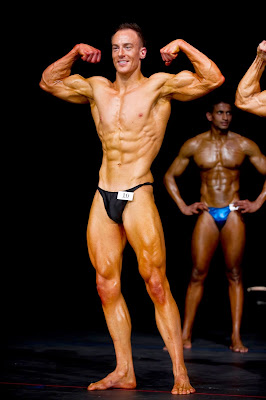
Natural Aesthetics
2. Prioritise your arm training. Schedule in a day of only arm training once a week or even start sessions with arm movements if their really lagging. Yes this will hinder the performance of other movements and the subsequent development of other body parts, but if you REALLY want bigger arms then you must utilize the most amounts of energy training them. You will be strongest at the start of the workouts and bigger weights can therefore be used. Leaving just enough energy at the end of the session to squeeze out a couple of sets will not create outstanding arms. This is potentially one of the downfall's of 3x per week full body training.
3. Fine tune your form to accentuate certain movements and muscular contractions. Small tweaks to exercise technique can make a big difference over a long period of time. For instance on dumbbell curls, keeping the elbows close to the body and rotating the wrist outwards slightly (little finger towards outside of shoulder) towards the top of the movement will incur a far greater bicep stimulus than letting the elbows move outwards and bringing the wrists in towards inner shoulder/chest. Dumbbell kickback tricep stimulation varies massively dependant upon body position in relation to elbow position; allowing the chest to rise and the elbows drop will not tax the triceps anywhere near as efficiently as keeping the upper torso low and the elbows high.
3 quick tips there to help optimize arm growth and blast past those plateaus. Advanced arm training theories coming soon.

Natural Aesthetics
Monday, 20 October 2014
If I Could Only do 5 Exercises....
1. SQUAT - The best lower body exercise. Nuff said!
2. DEADLIFT - The best exercise for overall posterior development. Hamstrings/glutes/lower back/abs/lats, rhomboids and traps/forearms. Massive exercise, must be included.
3. INCLINE DUMBELLS - Hits the chest hard and shoulders (varies depending on the % of incline) therefore more bang for your buck. Much prefer this movement to decline work.
4. WEIGHTED CHINS (close grip) - Best exercise for the lats. Heavy chins gives you wings!!!...and a hefty pair of biceps to match.
5. CLOSE GRIP BENCH - BIG tricep exercise as well as hitting the chest. Large triceps will do more for arm thickness than biceps.
Natural Aesthetics - Dream and Achieve
Tuesday, 14 October 2014
IS SQUATTING AN ABSOLUTE NECESSITY IN BODYBUILDING?

The question refers to whether or not the Barbell Back Squat is an absolute essential exercise for BODYBUILDING. Note the use of the word 'bodybuilding'; training purely for aesthetics. This is not in regards to strength training or powerlifting s the answer would be ENTIRELY the opposite.
For aesthetic purposes only, the squat is not essential. If you were to train your lower body HARD, smart and consistently for years without touching the squat rack you would more than likely have a decent set of legs. Heavy leg press, extensions, curls and lunges are great tools to build thigh mass - do these for long enough and hard enough and results will come. Aesthetically, its not the end of the world if you don't squat.
However, results would be FAR greater if squats were trained (properly/full depth) regularly with other lower body exercises or even as a replacement to all other lower body exercises. That's how good an exercise it is. I know I sound like I'm contradicting myself, but bear in mind the question is wether they are an absolute necessity for leg development. Leg muscles grow without squats, but you would be foolish to leave squats out of your routine knowing that they would produce far greater results in overall leg mass than any other exercise. I had decent legs a few years ago and my squatting was poor, infrequent and the technique inadequate. My legs were muscular from training HARD on exercises like lunges, leg press and extensions. The last 2 1/2 years or so I have focused mainly on progressing the squat for lower body training and subsequently my legs are bigger than ever.
As a natural trainee aiming to develop serious muscle mass - strength and it's progression must be considered. Simply pumping light weights with no regard to progression of reps, sets, weight or intensity variables will not yield the results commonly seen by trainers using steroids. The squat is the key exercise in the development of lower body strength and strength progression is the catalyst for any natural bodybuilders muscular development.
Although we can build lower body muscle without the back squat, progression will be far greater if heavy back squats are included in your routine regularly - especially for NATURAL trainers where strength progression is so key (but not the only way) to increased muscular development.
Although we can build lower body muscle without the back squat, progression will be far greater if heavy back squats are included in your routine regularly - especially for NATURAL trainers where strength progression is so key (but not the only way) to increased muscular development.
Any questions, OR ONLINE TRAINING enquiry's email me at rossi01@hotmail.co.uk
Facebook - www.facebook.com/naturalaesthet1cs
Youtube - www.youtube.com/naturalaestheticstv
Natural Aesthetics - Dream and Achieve
Friday, 3 October 2014
SHOULD I TRACK CALORIES OR JUST EAT CLEAN?
"Should I track Kcal or just eat clean?"
First, lets define 'clean' as foods that are generally not subjected to refinement processes prior to consumption and contain no or very little artificial ingredients. This is not black and white; there is no clear line separating 'clean' and 'dirty' foods from one another. Foods might contain clean and dirty components, meals also might be a mixture of the too which makes it difficult to be so clear cut about what's what. I don't particular like labelling foods as clean or dirty; but for the sake of the discussion we will as most have an understanding of what 'clean' eating entails (I hope).
Person a) Average trainee struggling with controlling bodyweight decides to diet. A considerable portion of their diet will perhaps be made up of calorie dense foods; breads, cereals and sandwiches with fatty fillings. These foods are easy to eat and are often branded as 'healthy/lighter' choices. The truth is that many of these foodstuffs are not much different from foods that we generally think of as 'unhealthy' in terms of kcal and or macronutrients (carbs/fat/protein). Companies pay huge sums of money to make their products appear healthy and attractive to consumers conscious of weight and health. The vast majority of shop bought sandwiches contain more fat and salt than a McDonalds Hamburger; yet have been labelled as the 'healthy' go-to for lunch in the UK for years. Add to this sugary cereals and toast or fruit juice for breakfast, coffees and tea throughout the day and a ready meal for dinner with a glass of wine and person a) will more than likely be in a calorie surplus. This means weight gain; how much and how quick will be dependant on many calories over BMR (the kcal you need to maintain body weight) that person is consuming over a longer period of time. BMR will depend on multiple factors, but it is often low in untrained/sedentary people (which makes it easier to overeat and thus gain bodyfat).
So, person a) decides to reduce carbohydrates, cut them out completely after 6pm, cuts out wine and sugar in coffee, replaces the ready meal with salad and chicken, uses skimmed milk instead full fat ETC. ETC. This is a generalisation but most people follow those sort of procedures when decided to diet.
After 4 weeks of this they will have lost some bodyweight, some of that body fat. They will then associate said weight loss with the new foods they are eating; rather than the calorie deficit that these new foods have created. Salads, vegetables, lean meats and low GI (glycaemic index) carbs such as brown rice, quinoa, oats etc. are filling and generally leave you feeling satisfied for longer. 500kcal of chicken, rice and veg is ALOT harder to eat than 500kcal's worth of microwavable lasagne, thus causing the dieter to generally eat LESS when eating 'clean'. These 'clean' foods do not have magic fat loss properties, its the reduction in kcal brought about by switching from processed, calorie dense foods which are easier to eat in large quantities, to these lighter unprocessed foods that causes the weight loss. This is something people tend to misinterpret and thus contribute to the weight loss confusion; person a) will proudly tell their friend that the secret to their fat loss was simply no carbohydrates after 6pm or by eating less red meat and more white fish but fail to realise the REAL reason why this worked; calorie reduction. The friend then desperately tries this but of course this will only work dependant on the friends overall diet and kcal intake in relation to BMR.
I'm not saying that kcal intake is the absolute be all and end all to weight management, because its not. Im not advocating a whatever fits into your kcal and you'll loose weight approach. Health is number 1, I always advocate a 'clean' eating approach; consuming MOST of your kcal from unprocessed, fresh produce. Fresh meats and fish, good quaility dairy and fibre rich carbohydrate sources aswell as nutrient dense fruit and vegetables. Allowing a small percentage of overall kcal to be derived from 'dirty' food, if you wish, will not harm your weight loss goals; as long as you eat within your BMR.
In summary, Kcal will have the most bearing on weight management and that eating 'clean' generally causes weight loss because of the reduction of kcal associated with choosing these foods over denser, calorie rich processed foods. Not because of some magical weightloss property in certain foodstuffs; which so frequently people are lead to believe. Track Kcal; apply science and common sense to your weight management and take out the guesswork. Eat mostly unprocessed foods, rich in micronutrients, but allow yourselves to eat foods that you enjoy as this WILL help in the long run.


For more information on dieting and how to apply it to yourself to help reach your goals, message me at rossi01@hotmail.co.uk, via www.facebook.com/naturalaesthet1cs or www.youtube.com/naturalaestheticstv
Natural Aesthetics - Dream and Achieve
Ross Newham
First, lets define 'clean' as foods that are generally not subjected to refinement processes prior to consumption and contain no or very little artificial ingredients. This is not black and white; there is no clear line separating 'clean' and 'dirty' foods from one another. Foods might contain clean and dirty components, meals also might be a mixture of the too which makes it difficult to be so clear cut about what's what. I don't particular like labelling foods as clean or dirty; but for the sake of the discussion we will as most have an understanding of what 'clean' eating entails (I hope).
Person a) Average trainee struggling with controlling bodyweight decides to diet. A considerable portion of their diet will perhaps be made up of calorie dense foods; breads, cereals and sandwiches with fatty fillings. These foods are easy to eat and are often branded as 'healthy/lighter' choices. The truth is that many of these foodstuffs are not much different from foods that we generally think of as 'unhealthy' in terms of kcal and or macronutrients (carbs/fat/protein). Companies pay huge sums of money to make their products appear healthy and attractive to consumers conscious of weight and health. The vast majority of shop bought sandwiches contain more fat and salt than a McDonalds Hamburger; yet have been labelled as the 'healthy' go-to for lunch in the UK for years. Add to this sugary cereals and toast or fruit juice for breakfast, coffees and tea throughout the day and a ready meal for dinner with a glass of wine and person a) will more than likely be in a calorie surplus. This means weight gain; how much and how quick will be dependant on many calories over BMR (the kcal you need to maintain body weight) that person is consuming over a longer period of time. BMR will depend on multiple factors, but it is often low in untrained/sedentary people (which makes it easier to overeat and thus gain bodyfat).
So, person a) decides to reduce carbohydrates, cut them out completely after 6pm, cuts out wine and sugar in coffee, replaces the ready meal with salad and chicken, uses skimmed milk instead full fat ETC. ETC. This is a generalisation but most people follow those sort of procedures when decided to diet.
After 4 weeks of this they will have lost some bodyweight, some of that body fat. They will then associate said weight loss with the new foods they are eating; rather than the calorie deficit that these new foods have created. Salads, vegetables, lean meats and low GI (glycaemic index) carbs such as brown rice, quinoa, oats etc. are filling and generally leave you feeling satisfied for longer. 500kcal of chicken, rice and veg is ALOT harder to eat than 500kcal's worth of microwavable lasagne, thus causing the dieter to generally eat LESS when eating 'clean'. These 'clean' foods do not have magic fat loss properties, its the reduction in kcal brought about by switching from processed, calorie dense foods which are easier to eat in large quantities, to these lighter unprocessed foods that causes the weight loss. This is something people tend to misinterpret and thus contribute to the weight loss confusion; person a) will proudly tell their friend that the secret to their fat loss was simply no carbohydrates after 6pm or by eating less red meat and more white fish but fail to realise the REAL reason why this worked; calorie reduction. The friend then desperately tries this but of course this will only work dependant on the friends overall diet and kcal intake in relation to BMR.
I'm not saying that kcal intake is the absolute be all and end all to weight management, because its not. Im not advocating a whatever fits into your kcal and you'll loose weight approach. Health is number 1, I always advocate a 'clean' eating approach; consuming MOST of your kcal from unprocessed, fresh produce. Fresh meats and fish, good quaility dairy and fibre rich carbohydrate sources aswell as nutrient dense fruit and vegetables. Allowing a small percentage of overall kcal to be derived from 'dirty' food, if you wish, will not harm your weight loss goals; as long as you eat within your BMR.
In summary, Kcal will have the most bearing on weight management and that eating 'clean' generally causes weight loss because of the reduction of kcal associated with choosing these foods over denser, calorie rich processed foods. Not because of some magical weightloss property in certain foodstuffs; which so frequently people are lead to believe. Track Kcal; apply science and common sense to your weight management and take out the guesswork. Eat mostly unprocessed foods, rich in micronutrients, but allow yourselves to eat foods that you enjoy as this WILL help in the long run.


For more information on dieting and how to apply it to yourself to help reach your goals, message me at rossi01@hotmail.co.uk, via www.facebook.com/naturalaesthet1cs or www.youtube.com/naturalaestheticstv
Natural Aesthetics - Dream and Achieve
Ross Newham
Monday, 22 September 2014
HOW TO MAKE CONSISTENT PROGRESS IN THE GYM.
Food for thought hear guys; just a really quick article regarding training progression and why most people do not achieve the results they want.
The top graph in the diagram depicts the progress 95% of gym goers see. After their initial gains in strength/muscularity from the body adapting to new loads (starting training) they will generally stall and fail to make any headway. They have no plan, do not track performance or variables and thus have no idea what to do to improve. They train MINDLESSLY, hopping from exercise to exercise, seeking out the pump.
The second graph shows a linear approach to training - in that progress is attempted each and every session. These guys have a plan and train hard to try and reach their goals but fail to understand that progress cannot be made continually. This works, to a point; until injuries start building up, fatigue sets in, demotivation perhaps and plateaus. This, combined with the first graph was how I trained for many years. Poor exercise form/chronic muscle tightness on key exercises as well as an inability to back down lead to plateaus and injuries.
The third chart represents the few trainers who understand patience is key to making consistent progress. Periods of intense, heavy training are followed by periods of lighter training to help the body recover and enable continued progress to be made once the intensity rises again. This can be called 'periodization' and is the best way to train for the longest without encountering injuries. Progress may be slow, but consistent. This is the phase of training I'm moving into now and I urge you to follow!

Ross Newham - Natural Aesthetics
www.youtube.com/naturalaestheticstv
www.facebook.com/naturalaesthet1cs
DREAM AND ACHIEVE
The top graph in the diagram depicts the progress 95% of gym goers see. After their initial gains in strength/muscularity from the body adapting to new loads (starting training) they will generally stall and fail to make any headway. They have no plan, do not track performance or variables and thus have no idea what to do to improve. They train MINDLESSLY, hopping from exercise to exercise, seeking out the pump.
The second graph shows a linear approach to training - in that progress is attempted each and every session. These guys have a plan and train hard to try and reach their goals but fail to understand that progress cannot be made continually. This works, to a point; until injuries start building up, fatigue sets in, demotivation perhaps and plateaus. This, combined with the first graph was how I trained for many years. Poor exercise form/chronic muscle tightness on key exercises as well as an inability to back down lead to plateaus and injuries.
The third chart represents the few trainers who understand patience is key to making consistent progress. Periods of intense, heavy training are followed by periods of lighter training to help the body recover and enable continued progress to be made once the intensity rises again. This can be called 'periodization' and is the best way to train for the longest without encountering injuries. Progress may be slow, but consistent. This is the phase of training I'm moving into now and I urge you to follow!

Ross Newham - Natural Aesthetics
www.youtube.com/naturalaestheticstv
www.facebook.com/naturalaesthet1cs
DREAM AND ACHIEVE
Tuesday, 16 September 2014
INTERVALS, EPOC AND WHY THEY ARE GOOD FOR FAT-LOSS
First, lets define EPOC: Excessive PostExercise Oxygen Consumption, or simply, recovery oxygen consumption. Following exercise, the body does not immediately return to resting levels. Light, short duration activity, which causes little disruption in body temperature and hormonal balance, is followed by rapid recovery, almost unnoticed. Of course what's classed as'light' exercise depends on the physical condition of the individual, for instance, an overweight person whom is unused to any considerable amount of exercise or even movement, will not recover as quickly doing the same activity as someone who is generally better prepared for physical exertion. One half of the total oxygen recovery consumption will occur within 30 seconds and total recovery within 4-7 minutes, this is known as the fast component in recovery oxygen consumption.
On the other hand, stressful exercise such as completing 20 back squats nearing muscular failure, or running 400m as quickly as possible will require considerable time for resting metabolism to occur (slow component). The length and the intensity of exercise will determine how long this takes; research has shown this can take as long as 24 hours for the body to return back to baseline oxygen consumption levels (McArdle, Katch and Katch, 2007). To reiterate, a considerably greater oxygen debt will be placed upon the body following strenuous exercise. This means that the body will utilise more oxygen (Litres) in an attempt to return to pre-exercise oxygen consumption.
Why does the body need so much oxygen following exhaustive exercise (where the activity requires a significant anaerobic component as well as aerobic)? There are a few factors that contribute to EPOC; a small part of it is used to aid re-synthesis of lactate to glycogen (although this is mostly the job of dietary carbohydrates - which is a good thing for fat loss). Elevated body temperature also contributes to EPOC. Temperature can rise by up to 3c during exhaustive exercise and can remain elevated for hours after the exercise. This stimulates metabolism to increase oxygen consumption during recovery. Natural Fat burners guys...
Up to 10% of of recovery oxygen will be used to take the blood from the trained muscles back to the lungs, as well as the restoration of oxygen lost via bodily fluids and that which is bound to myoglobin in the active muscles. Ventilation volumes remain elevated, the heart works harder and requires greater oxygen supply during prolonged recovery, tissue repair and redistribution of key minerals and ions and the residual thermogenic hormones relaesed during exercise all go towards keeping metabolism elevated during EPOC.
In summary, after prolonged strenuous aerobic or exhaustive anaerobic activity the body requires more oxygen for considerable lengths of time to recover. This means a potential greater kcal expenditure during EPOC, rather than just kcal expended during exercise, something which can make weight management easier for everyone.
However, attempting to train at the intensity and duration required to induce said EPOC is difficult. Extreme intensity is necessary, something which trainees need time to work up to. Imagine performing 20 back squats with a weight you would usually do 10, or a cross country race for for a 5 second pb, or perhaps 2 minutes worth of clean and press with a 70%1rm followed by 50 burpees. Extreme pain comes to mind. This is where intervals can become very useful. Shorter (supermaximal) bouts of exercise, intermittently spaced between rest periods, can produce substantial recovery oxygen consumption for well over an hour (McArdle, Katch and Katch, 2007).
An exercise that when performed continuously would normally cause exhaustion within several minutes can be split up into intermittent segments of work and rest periods. By structuring the workout in such a way a much greater volume of workload can be achieved thus overloading the energy transfer system. Exercise up to 8 seconds (all-out intensity) relies on intramuscular phosphates to provide the majority of the energy. Due to quicker recovery and lower blood lactate levels, intense exercise can follow after a brief recovery period. Total work volume over a session can increase using interval training. Christenson EH, et al. found that by adding a 5 second rest period to every 10 second of running the athlete improved the total distance ran by nearly 5 times that of the distance ran at a continuous speed before exhaustion.
Total Distance run (yards) for 4 min of continuous (until exhaustion) - 1422
Total Distance run (yards) for 10s exercise/5s rest - 7294
{Same speed for both days)
Intervals are a fantastic tool for increasing workload, past the point one would usually fail at if exercising continuously. This means greater kcal expenditure and potentially better weight management. Think twice before you jump on that treadmill and half ass that 5km. Utilize full body weight lifting movements within your intervals (squat thrusters/clean and press etc.) to produce the physiological adaptations associated with weight bearing movements (increased muscle mass/strength etc.) AND burn substantial kcal during and after exercise!
Ross - Natural Aesthetics
www.youtube.com/naturalaestheticstv
www.facebook.com/naturalaesthet1cs
On the other hand, stressful exercise such as completing 20 back squats nearing muscular failure, or running 400m as quickly as possible will require considerable time for resting metabolism to occur (slow component). The length and the intensity of exercise will determine how long this takes; research has shown this can take as long as 24 hours for the body to return back to baseline oxygen consumption levels (McArdle, Katch and Katch, 2007). To reiterate, a considerably greater oxygen debt will be placed upon the body following strenuous exercise. This means that the body will utilise more oxygen (Litres) in an attempt to return to pre-exercise oxygen consumption.
Why does the body need so much oxygen following exhaustive exercise (where the activity requires a significant anaerobic component as well as aerobic)? There are a few factors that contribute to EPOC; a small part of it is used to aid re-synthesis of lactate to glycogen (although this is mostly the job of dietary carbohydrates - which is a good thing for fat loss). Elevated body temperature also contributes to EPOC. Temperature can rise by up to 3c during exhaustive exercise and can remain elevated for hours after the exercise. This stimulates metabolism to increase oxygen consumption during recovery. Natural Fat burners guys...
Up to 10% of of recovery oxygen will be used to take the blood from the trained muscles back to the lungs, as well as the restoration of oxygen lost via bodily fluids and that which is bound to myoglobin in the active muscles. Ventilation volumes remain elevated, the heart works harder and requires greater oxygen supply during prolonged recovery, tissue repair and redistribution of key minerals and ions and the residual thermogenic hormones relaesed during exercise all go towards keeping metabolism elevated during EPOC.
In summary, after prolonged strenuous aerobic or exhaustive anaerobic activity the body requires more oxygen for considerable lengths of time to recover. This means a potential greater kcal expenditure during EPOC, rather than just kcal expended during exercise, something which can make weight management easier for everyone.
However, attempting to train at the intensity and duration required to induce said EPOC is difficult. Extreme intensity is necessary, something which trainees need time to work up to. Imagine performing 20 back squats with a weight you would usually do 10, or a cross country race for for a 5 second pb, or perhaps 2 minutes worth of clean and press with a 70%1rm followed by 50 burpees. Extreme pain comes to mind. This is where intervals can become very useful. Shorter (supermaximal) bouts of exercise, intermittently spaced between rest periods, can produce substantial recovery oxygen consumption for well over an hour (McArdle, Katch and Katch, 2007).
An exercise that when performed continuously would normally cause exhaustion within several minutes can be split up into intermittent segments of work and rest periods. By structuring the workout in such a way a much greater volume of workload can be achieved thus overloading the energy transfer system. Exercise up to 8 seconds (all-out intensity) relies on intramuscular phosphates to provide the majority of the energy. Due to quicker recovery and lower blood lactate levels, intense exercise can follow after a brief recovery period. Total work volume over a session can increase using interval training. Christenson EH, et al. found that by adding a 5 second rest period to every 10 second of running the athlete improved the total distance ran by nearly 5 times that of the distance ran at a continuous speed before exhaustion.
Total Distance run (yards) for 4 min of continuous (until exhaustion) - 1422
Total Distance run (yards) for 10s exercise/5s rest - 7294
{Same speed for both days)
Intervals are a fantastic tool for increasing workload, past the point one would usually fail at if exercising continuously. This means greater kcal expenditure and potentially better weight management. Think twice before you jump on that treadmill and half ass that 5km. Utilize full body weight lifting movements within your intervals (squat thrusters/clean and press etc.) to produce the physiological adaptations associated with weight bearing movements (increased muscle mass/strength etc.) AND burn substantial kcal during and after exercise!
Ross - Natural Aesthetics
www.youtube.com/naturalaestheticstv
www.facebook.com/naturalaesthet1cs
Sunday, 31 August 2014
6 COMMANDMENTS OF NATURAL MUSCLE GROWTH
1. EAT TO GROW! Feed your body the necessary calories required to add muscle. Your trying to gain weight; to add muscle tissue...this is not possible if your chronically under-eating. Rice cakes and chicken will not cut it 24/7.
2. INTENSITY IS EVERYTHING! Stop farting around and start training like its your job. 15 rep sets with a weight that you could do 25 reps with will not cause serious growth. Embrace pain - learn to love it!!
3. FOCUS ON WHATS IMPORTANT! Stop worrying about stuff that doesn't matter....how many meals are optimal/what type of carbs should one eat/how many sets should one do? Just DO something, its never going to be 100% optimal.
4. PATIENCE! Unless you have amazing genetics to build muscle its going to take years. Accept it and your training will benefit from that. Stop looking for a shortcut, supplement or a secret training formula that will get you to where you want quicker.....leave that for those who want to use drugs.
5. TRAIN HEAVY! To build a big natural physique your going to have to lift heavy! Ive never seen a BIG natural who trained with light weights exclusively. Include compounds lifts (multiple muscle movements; bench/deadlift/squat/overhead press/pullups and dips etc.) in your training. Focus on getting stronger over time on these lifts and they will act as a catalyst for your training and physique.
6. VARIETY ISN'T ESSENTIAL! Variety for the sake of it is far too common. Why change exercises when the basics have not been mastered. TOO much variety will hinder progress. Muscles do not need exercise surprises, bludgeon them into growth with variations of volume (how much training, sets and reps)/frequency (how many times per training cycle) and intensity (weight and or overload techniques) instead.

Ross - Natural Aesthetics
Friday, 9 May 2014
The Decline of Boybuilding and the art of Posing.
Its my humble opinion that the physiques of top tier bodybuilders have been getting worse since the 1990's. Mass is obviously the order of the day, but with little regard to shape, balance, aesthetics and quality of posing. Don't get me wrong, there are some fantastic physiques out there but it seems that for guys to push into the top tier (IFBB) they have to add so much mass to compete that it ruins the balance and aesthetics that made them good in the first place.
.png) |

There is far less emphasis on the athletes individual posing routines nowadays. Top IFBB bodybuilders nowadays cannot pose as well as the bodybuilders 30 years ago. This is not just because their heavily muscled physiques are not suited to many of the artistic poses but also because the judging doesn't seem to care for it or at least encourage it during shows. Kai Greene is an exception (he is a master in posing). Only the mandatory poses (essential) seem relevant now.
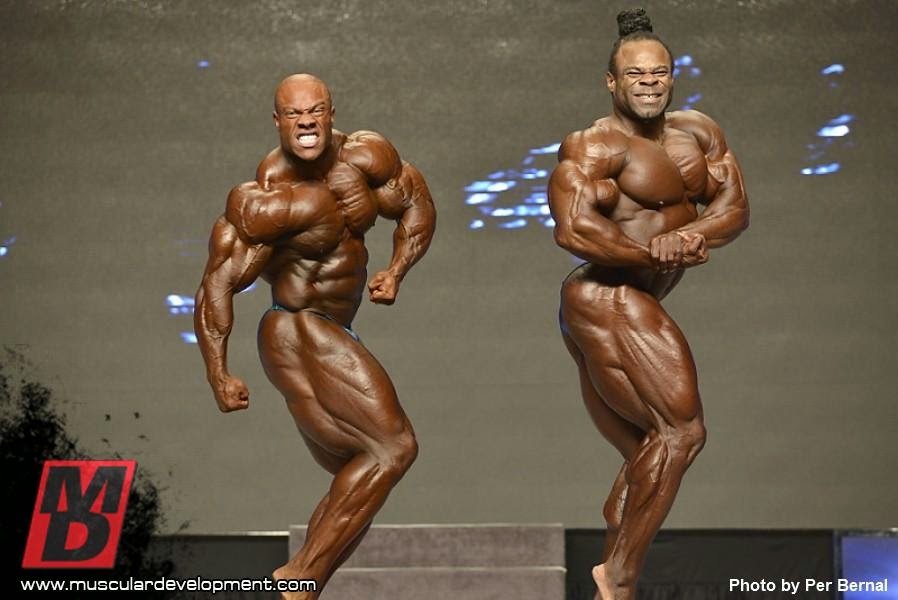
The increasing dosages of drugs, as well as the introduction of other drugs/compounds (namely HGH and insulin) have ruined top tier bodybuilding. The physiques are impressive; massive behemoths with striated glutes - yet very few of them can perform side poses that well and none of them can perform a vacuum (sucking your abs in to make the waist like tiny from the front/side). What is the point of having an extra 20kg of muscle on the frame but adding another 3+inches to the waist?! This destroys the purpose of having more muscle because it looks far less impressive!

Top tier bodybuilders nowadays seem to present a collection of fantastic body parts, rather than a flowing, strong entire physique. A lot of these athletes (not all of them) train mostly with machines now and it shows in their body shape and presentation. Unfortunately with the drugs available its clear that heavy, intense training with free weights isn't needed to build a massive physique when these compounds are used. Many top tier natural bodybuilders still train very heavy with mostly free weights and achieve fantastic results, whilst keeping a narrow waist!


Thursday, 13 March 2014
NATURAL AESTHETICS Competition Training Program 2014
Day 1 [upper]
Incline DB's - 5x5
BB row - 5x5
Military Press - 5x5
Low row - 3x10
Rear delt rows - 3x10
Close Grip bench - 5x5
DB hammer curls - 3x10
Day 2 [lower]
Back squat - 5x5
Leg Press - 5x12-->4
Hamstring curls - 5x5
Calves - 3x10
+cardio (25min)
+Ab circuit
Day 3 [upper]
BB bench press - 5x5
Pull-ups - 5x5
DB Shoulder Press - 5x5
DB Flys - 3x10
DB Laterals/upright rows - 3x10
Cheat curls - 5x5
Bar Pushdowns - 3x10
Day 4 [lower]
Deadlift - 5x5
Front Squat - 5x5
Hamstring Curl - 3x10
Calves - 3x10
+cardio (25min)
+Ab circuit
+ Cardio (HIIT) 8x30sec sprints/60sec recovery - on Day 5
Notes -
* 5x5 will usually indicate 5 sets of 5 including ramping sets, only last set will be a true 'working set'.
* Occasionally, I may veer away from the layout of the program during a particular session and blast a compound exercise for more sets than prescribed.
* Attempting to increase, or at the very least fighting to maintain strength, in the big compound movements will be of the upmost importance.
Aiming to beat the size achieved last year:

Natural Aesthetics - Dream and Achieve
Ross
Monday, 17 February 2014
Are Isolation Exercises Worthwhile for Novices?
The first and probably hardest part of the question is to actually define a novice. I'm not going to give a definitive set of numbers for the major lifts as this can be misleading. Trainees can see massive improvements in musculature during their first few months without touching the big three lifts. Most weight bearing exercise is usually above and beyond what the trainer will have experienced thus far, illiciting rapid adaptations in musculature and strength. Instead I will simply define a novice as someone who has very little or no understanding about the general movement patterns needed to create changes to their physique. There is little or no understanding about training protocols such as volume or frequency or even how to train specific muscles appropriately.

Onto the second part of the question: are isolation exercises worthwhile for novices? The novice should allocate most of their training time and energy to learning the basic training movements: push, pull, squat and lift. Learning these properly as early as possible will put them in good stead for future training. These exercises will also provide the most carryover in strength to other movements both in and out of the gym.
However, I also believe that a lot of time should be spent on isolation exercises to further develop movement patterns and practise 'contracting' specific muscles. One of the key differences between a novice, intermediate and advanced trainer is the ability to focus on and prioritise certain muscles during both compound and isolation exercises. The quicker this 'mind to muscle' contraction is established the quicker the trainer can then potentially progress from novice to intermediate. Over-training becomes more important as the trainer becomes more advanced, it is not something to worry about in the novice stages.
The novice trainer should first and foremost concern themselves with learning and improving technique in the main movements (push/pull/squat/lift). Weight should then be added in a mostly linear fashion to each main exercise, whilst dedicating perhaps a third of time in the gym to isolation exercises. The novice should use this time to learn which muscles contract during certain exercises and more importantly to reiterate the contraction or 'feel' of the muscle during certain movements rather then simply moving weight.
Ross Newham - Natural Aesthetics
Subscribe to:
Posts (Atom)