Showing posts with label beginner. Show all posts

Wednesday, 21 October 2015

How to Bulk Without Sacrificing Health as a Natural Bodybuilder.

Before starting, lets just get one thing straight. As a natural bodybuilder/strength enthusiast excess calories need to be consumed to get stronger and bigger. Staying ultra lean all year round will not allow for you to continually put on muscle mass, unless your relatively new to training. Short terms gains in muscle mass/strength can occur whilst extremely lean if the trainee is perhaps switching from a very poor training methodology to a more efficient style with much greater intensity and time spent in the gym. No doubt this will lead to some impressive gains irrespective of leanness. However, for anyone who has been training for quite some time and training relatively hard/efficiently, excess calories will be essential in providing the fuel to train heavier/harder/longer and gain muscle tissue.

Bulking is essentially eating over-eating on purpose. Your TDEE (total daily energy expenditure) is made up of your BMR (Basal metabolic rate - kcal your body burns at rest) and any extra calories used from daily activities. You will burn the least amount of calories sleeping. Of course this fluctuates constantly depending on your activities (the BMR will also fluctuate slightly). To bulk effectively, one must consume more calories than the amount of the calories utilised from the TDEE on a daily basis. This will cause weight gain, how much of it and how fast will be determined by how much the calories consumed exceeds the TDEE by. The type of activities completed on a daily basis will contribute to the sort of bodyweight gained (fat or muscle or both). Obviously laying in bed all day whilst overeating will cause fat gain and minimal, perhaps even negative muscle gain. Weight training whilst overeating will cause muscle gain and fat gain (inevitable as a natural). How much muscle one can gain will be determined the quality of training (routine/volume/intensity/rest/technique will all play a part) as well as genetics, age and gender. The amount of calories consumed over the TDEE will also decide the amount of fat gained. Inevitably, a 1000kcal surplus will cause substantial fat gain over a period of weeks. Try shooting for between 200-400 and adjust accordingly as you go.  

This is more food than most people realise. Your not going to achieve this by eating chicken salad and weightwatchers meal replacement bars. Serious amounts of food need to be consumed on a DAILY basis. More often than not its easier to get to these calories by eating high calorie, processed junk food to supplement your daily intake. Its easy to eat and the kcal rack up quickly. However, if this is done for months on it can negatively effect health, which will of course only hinder you in the long term. The human body will not function as efficiently; its ability to produce muscle mass will be hindered. Not to mention ailments/disorders that can develop as a result of continued poor diet. To maintain good overall health whilst consuming high amounts of calories on a daily basis I would do the following:

Increase the portion of calories that will come from fat sources. Prioritise mostly unprocessed fats within this. Avocados, good quality olive oil, nuts and seeds, nut butters, oily and fatty fish, eggs and some read meat. This will help bulk the calories out without having to eat too much food volume (1g of fat contains 9 calories compared to only 4 in carb and protein sources). Fat macros should be much higher when bulking than cutting.

Protein shouldn't be excessively high. Copious amounts of meat consumed for long periods of time will not benefit the body's health. I don't think its as much meat, as the quality of meat and the health of the animal it comes from these days. Animals are pumped full of drugs to aid growth and stop diseases killing them before they reach full size. Dairy is much the same, try to limit the quantities consumed as it comes from the same, sick animals. I think 2-2.5g per kilo should be completely adequate. If money is no option buy organic and consume some lean sources and some fattier sources of meat, chicken thighs, red mince meat, oxtail, salmon and mackerel, eggs etc. Vegan protein powders can also be utilised to bulk up protein consumption without worrying about any more diary, sugars and chemicals in your system than what your already eating in your whole foods.

Carbohydrates should be high to fuel long and hard training sessions. Eat plenty of fresh fruit, bear in mind some will not give you many calories. Bananas are dense and stacked full of carbohydrates. Fresh fruit juice can help (not from concentrate or with added sugars). Utilise dried fruits, such as dates, figs and apricots (dates especially high in carbs) to really bulk up your carb consumption. Use processed bread sparingly, although easy to consume it can cause skin/digestive problems if its relied upon solely to bring in carbohydrate calories. Basics such as sweet potato, rice and oats work well. Vegetables should be eaten freely and often. This is imperative to maintain good overall health.

Example cutting/bulking macro structure:

Cutting -
200g carbohydrate
45g fat
185g protein

Bulking -
450g carbohydrate
90g fat
175g protein

This is just an example of how macros might look between cutting and bulking. Each person is different, a range of factors will influence the amount of each food source. In essence, increase unprocessed fat sources to help overall kcal intake, maintain a high vegetable, fruit intake and utilise dried fruits to help bulk out carbohydrates and keep water intake high (3litres+). Stay away from caffeinated, pre-workout supplements and anything promising you increased muscle gain/fat loss other than creatine. Nothing good will come from regular usage.    


Check out www.youtube.com/naturalaesthet1cs for videos.

For more info on online coaching email me at rossi01@hotmail.co.uk


Saturday, 25 October 2014

OPTIMIZING YOUR ARM TRAINING

1. Contrary to popular belief; arms have to be trained directly with good frequency (1-3 times per week) to grow to any appreciable size. Foregoing extremely good arm genetics, the triceps will not achieve great enough stimulus to grow adequately from just benching, nor will biceps from barbell rows. These are just examples of exercises, the same could be said of any primary chest/back exercise, other than perhaps dips which hit the triceps hard. Direct arm training must be included within your routine regularly if you want to surpass 16 inch lean guns.
2. Prioritise your arm training. Schedule in a day of only arm training once a week or even start sessions with arm movements if their really lagging. Yes this will hinder the performance of other movements and the subsequent development of other body parts, but if you REALLY want bigger arms then you must utilize the most amounts of energy training them. You will be strongest at the start of the workouts and bigger weights can therefore be used. Leaving just enough energy at the end of the session to squeeze out a couple of sets will not create outstanding arms. This is potentially one of the downfall's of 3x per week full body training.
3. Fine tune your form to accentuate certain movements and muscular contractions. Small tweaks to exercise technique can make a big difference over a long period of time. For instance on dumbbell curls, keeping the elbows close to the body and rotating the wrist outwards slightly (little finger towards outside of shoulder) towards the top of the movement will incur a far greater bicep stimulus than letting the elbows move outwards and bringing the wrists in towards inner shoulder/chest. Dumbbell kickback tricep stimulation varies massively dependant upon body position in relation to elbow position; allowing the chest to rise and the elbows drop will not tax the triceps anywhere near as efficiently as keeping the upper torso low and the elbows high.

3 quick tips there to help optimize arm growth and blast past those plateaus. Advanced arm training theories coming soon.


Natural Aesthetics


Monday, 20 October 2014

If I Could Only do 5 Exercises....


1. SQUAT - The best lower body exercise. Nuff said!
2. DEADLIFT - The best exercise for overall posterior development. Hamstrings/glutes/lower back/abs/lats, rhomboids and traps/forearms. Massive exercise, must be included.
3. INCLINE DUMBELLS - Hits the chest hard and shoulders (varies depending on the % of incline) therefore more bang for your buck. Much prefer this movement to decline work.
4. WEIGHTED CHINS (close grip) - Best exercise for the lats. Heavy chins gives you wings!!!...and a hefty pair of biceps to match.
5. CLOSE GRIP BENCH - BIG tricep exercise as well as hitting the chest. Large triceps will do more for arm thickness than biceps.

Natural Aesthetics - Dream and Achieve

Tuesday, 14 October 2014

IS SQUATTING AN ABSOLUTE NECESSITY IN BODYBUILDING?


The question refers to whether or not the Barbell Back Squat is an absolute essential exercise for BODYBUILDING. Note the use of the word 'bodybuilding'; training purely for aesthetics. This is not in regards to strength training or powerlifting s the answer would be ENTIRELY the opposite. 

For aesthetic purposes only, the squat is not essential. If you were to train your lower body HARD, smart and consistently for years without touching the squat rack you would more than likely have a decent set of legs. Heavy leg press, extensions, curls and lunges are great tools to build thigh mass - do these for long enough and hard enough and results will come. Aesthetically, its not the end of the world if you don't squat.

However, results would be FAR greater if squats were trained (properly/full depth) regularly with other lower body exercises or even as a replacement to all other lower body exercises. That's how good an exercise it is. I know I sound like I'm contradicting myself, but bear in mind the question is wether they are an absolute necessity for leg development. Leg muscles grow without squats, but you would be foolish to leave squats out of your routine knowing that they would produce far greater results in overall leg mass than any other exercise. I had decent legs a few years ago and my squatting was poor, infrequent and the technique inadequate. My legs were muscular from training HARD on exercises like lunges, leg press and extensions. The last 2 1/2 years or so I have focused mainly on progressing the squat for lower body training and subsequently my legs are bigger than ever.  

As a natural trainee aiming to develop serious muscle mass - strength and it's progression must be considered. Simply pumping light weights with no regard to progression of reps, sets, weight or intensity variables will not yield the results commonly seen by trainers using steroids. The squat is the key exercise in the development of lower body strength and strength progression is the catalyst for any natural bodybuilders muscular development.

Although we can build lower body muscle without the back squat, progression will be far greater if heavy back squats are included in your routine regularly - especially for NATURAL trainers where strength progression is so key (but not the only way) to increased muscular development.  

Any questions, OR ONLINE TRAINING enquiry's email me at rossi01@hotmail.co.uk

Facebook - www.facebook.com/naturalaesthet1cs
Youtube - www.youtube.com/naturalaestheticstv

Natural Aesthetics - Dream and Achieve


Sunday, 31 August 2014


6 COMMANDMENTS OF NATURAL MUSCLE GROWTH


1. EAT TO GROW! Feed your body the necessary calories required to add muscle. Your trying to gain weight; to add muscle tissue...this is not possible if your chronically under-eating. Rice cakes and chicken will not cut it 24/7.
 
2. INTENSITY IS EVERYTHING! Stop farting around and start training like its your job. 15 rep sets with a weight that you could do 25 reps with will not cause serious growth. Embrace pain - learn to love it!! 
 
3. FOCUS ON WHATS IMPORTANT! Stop worrying about stuff that doesn't matter....how many meals are optimal/what type of carbs should one eat/how many sets should one do? Just DO something, its never going to be 100% optimal.
 
4. PATIENCE! Unless you have amazing genetics to build muscle its going to take years. Accept it and your training will benefit from that. Stop looking for a shortcut, supplement or a secret training formula that will get you to where you want quicker.....leave that for those who want to use drugs.
 
5. TRAIN HEAVY! To build a big natural physique your going to have to lift heavy! Ive never seen a BIG natural who trained with light weights exclusively. Include compounds lifts (multiple muscle movements; bench/deadlift/squat/overhead press/pullups and dips etc.) in your training. Focus on getting stronger over time on these lifts and they will act as a catalyst for your training and physique.
 
6. VARIETY ISN'T ESSENTIAL! Variety for the sake of it is far too common. Why change exercises when the basics have not been mastered. TOO much variety will hinder progress. Muscles do not need exercise surprises, bludgeon them into growth with variations of volume (how much training, sets and reps)/frequency (how many times per training cycle) and intensity (weight and or overload techniques) instead.


Ross - Natural Aesthetics


Friday, 9 May 2014

The Decline of Boybuilding and the art of Posing.


Its my humble opinion that the physiques of top tier bodybuilders have been getting worse since the 1990's. Mass is obviously the order of the day, but with little regard to shape, balance, aesthetics and quality of posing. Don't get me wrong, there are some fantastic physiques out there but it seems that for guys to push into the top tier (IFBB) they have to add so much mass to compete that it ruins the balance and aesthetics that made them good in the first place.


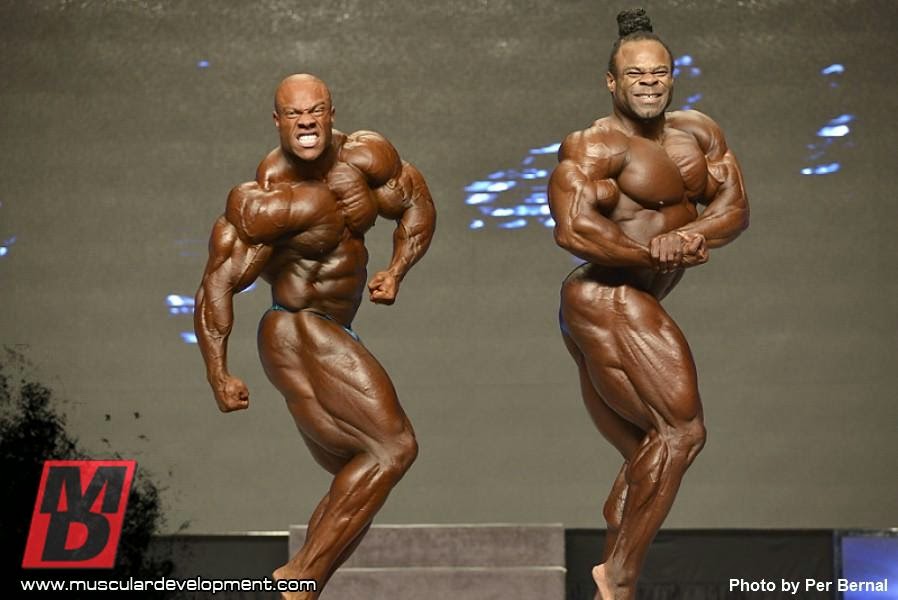
There is far less emphasis on the athletes individual posing routines nowadays. Top IFBB bodybuilders nowadays cannot pose as well as the bodybuilders 30 years ago. This is not just because their heavily muscled physiques are not suited to many of the artistic poses but also because the judging doesn't seem to care for it or at least encourage it during shows. Kai Greene is an exception (he is a master in posing). Only the mandatory poses (essential) seem relevant now.


The increasing dosages of drugs, as well as the introduction of other drugs/compounds (namely HGH and insulin) have ruined top tier bodybuilding. The physiques are impressive; massive behemoths with striated glutes - yet very few of them can perform side poses that well and none of them can perform a vacuum (sucking your abs in to make the waist like tiny from the front/side). What is the point of having an extra 20kg of muscle on the frame but adding another 3+inches to the waist?! This destroys the purpose of having more muscle because it looks far less impressive!  


Top tier bodybuilders nowadays seem to present a collection of fantastic body parts, rather than a flowing, strong entire physique. A lot of these athletes (not all of them) train mostly with machines now and it shows in their body shape and presentation. Unfortunately with the drugs available its clear that heavy, intense training with free weights isn't needed to build a massive physique when these compounds are used. Many top tier natural bodybuilders still train very heavy with mostly free weights and achieve fantastic results, whilst keeping a narrow waist!     


More Blog articles coming soon.
Ross Newham - Natural Aesthetics


Monday, 17 February 2014

Are Isolation Exercises Worthwhile for Novices?

The first and probably hardest part of the question is to actually define a novice. I'm not going to give a definitive set of numbers for the major lifts as this can be misleading. Trainees can see massive improvements in musculature during their first few months without touching the big three lifts. Most weight bearing exercise is usually above and beyond what the trainer will have experienced thus far, illiciting rapid adaptations in musculature and strength. Instead I will simply define a novice as someone who has very little or no understanding about the general movement patterns needed to create changes to their physique. There is little or no understanding about training protocols such as volume or frequency or even how to train specific muscles appropriately. 

Onto the second part of the question: are isolation exercises worthwhile for novices? The novice should allocate most of their training time and energy to learning the basic training movements: push, pull, squat and lift. Learning these properly as early as possible will put them in good stead for future training. These exercises will also provide the most carryover in strength to other movements both in and out of the gym. 

However, I also believe that a lot of time should be spent on isolation exercises to further develop movement patterns and practise 'contracting' specific muscles. One of the key differences between a novice, intermediate and advanced trainer is the ability to focus on and prioritise certain muscles during both compound and isolation exercises. The quicker this 'mind to muscle' contraction is established the quicker the trainer can then potentially progress from novice to intermediate. Over-training becomes more important as the trainer becomes more advanced, it is not something to worry about in the novice stages. 

The novice trainer should first and foremost concern themselves with learning and improving technique in the main movements (push/pull/squat/lift). Weight should then be added in a mostly linear fashion to each main exercise, whilst dedicating perhaps a third of time in the gym to isolation exercises. The novice should use this time to learn which muscles contract during certain exercises and more importantly to reiterate the contraction or 'feel' of the muscle during certain movements rather then simply moving weight.

Ross Newham - Natural Aesthetics