Click the link to go to the MAX - OT link page or simply navigate via the top page headers:
Natural Aesthetics - Drug free bodybuilding: MAX - OT - Natural Aesthetics Excel Template:

Showing posts with label physique. Show all posts
Showing posts with label physique. Show all posts
Sunday, 4 October 2015

Monday, 13 July 2015
Building a better body.
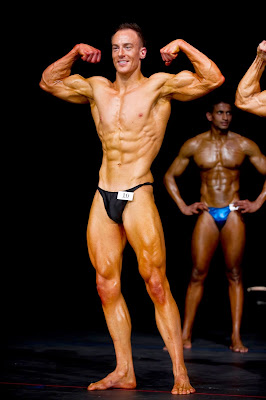
There is a massive difference between having a good body and being muscular. Muscularity at the cost of aesthetics is pointless. Guys on the ifbb stage continue to get bigger and bigger, yet look less aesthetic with every 5lb gained. An extra inch on the arms at the price of an extra inch on the waist is simply not worth it in my eyes - and does little to improve the look of the physique as a whole.
Proportion is also something that is often neglegted. Common mistakes are forgoing triceps training for biceps. Shoulders being too large for arms and shoulders being too wide for chest/back thickness, as well as the legs being too wiry for the upper body. Of course this is a matter of opinion and also something that often seems to be exaggerated by steroid usage; where muscle growth is extremely fast in certain areas (shoulders,traps etc) which leads to disproportion is the trainee is not careful.

Posture is also often overlooked. Its extremely important for creating a visually impactful physique, something that is clearly seen and recognised by non-lifters. Posture can create vastly different quality aesthetics in equally muscled physiques. Two guys could have the same muscle mass; one with great posture, one with hunched shoulders, tight traps and a caved chest, the former will always look better. This also relates to proportion, as spending too much time training a certain area can cause postural imbalances. There are certain exercises that one can perform on a regular basis to help posture. Simply training the body with compound movements will drastically reduce the risk of postural problems. This teaches the body to move as a unit and can help to create a flowing, well - rounded physique.
Overhead press with full lockout is a must. The bar should travel upwards, arms fully straightened, to finish level with the back area of the head. This will sort a lot of upper body posture problems.

Wall pushes can help with developing the technique and mobility to perform the overhead press properly. Simply stand back facing a wall, heels, bum, shoulders and head touching and slide hands upwards against the wall to the overhead positions; keeping elbows and knuckles against the wall.
Simply practising keeping the back arched rather than rounded will improve posture. Learning to draw the shoulders back, keeping chest high and out - will create a more confident and attractive physique. Deadlifts, bent rows and low row will help with accentuating this.

We shouldn't just strive for muscularity in the gym. Muscularity doesn't equate to a nice physique, as seen by some of the monstrosities in your local gym. Rather, focus on attaining an aesthetic physique by keeping in mind the pointers I've just discussed.
Natural Aesthetics

Proportion is also something that is often neglegted. Common mistakes are forgoing triceps training for biceps. Shoulders being too large for arms and shoulders being too wide for chest/back thickness, as well as the legs being too wiry for the upper body. Of course this is a matter of opinion and also something that often seems to be exaggerated by steroid usage; where muscle growth is extremely fast in certain areas (shoulders,traps etc) which leads to disproportion is the trainee is not careful.
Posture is also often overlooked. Its extremely important for creating a visually impactful physique, something that is clearly seen and recognised by non-lifters. Posture can create vastly different quality aesthetics in equally muscled physiques. Two guys could have the same muscle mass; one with great posture, one with hunched shoulders, tight traps and a caved chest, the former will always look better. This also relates to proportion, as spending too much time training a certain area can cause postural imbalances. There are certain exercises that one can perform on a regular basis to help posture. Simply training the body with compound movements will drastically reduce the risk of postural problems. This teaches the body to move as a unit and can help to create a flowing, well - rounded physique.
Overhead press with full lockout is a must. The bar should travel upwards, arms fully straightened, to finish level with the back area of the head. This will sort a lot of upper body posture problems.
Wall pushes can help with developing the technique and mobility to perform the overhead press properly. Simply stand back facing a wall, heels, bum, shoulders and head touching and slide hands upwards against the wall to the overhead positions; keeping elbows and knuckles against the wall.
Simply practising keeping the back arched rather than rounded will improve posture. Learning to draw the shoulders back, keeping chest high and out - will create a more confident and attractive physique. Deadlifts, bent rows and low row will help with accentuating this.
We shouldn't just strive for muscularity in the gym. Muscularity doesn't equate to a nice physique, as seen by some of the monstrosities in your local gym. Rather, focus on attaining an aesthetic physique by keeping in mind the pointers I've just discussed.
Natural Aesthetics
Saturday, 25 October 2014
OPTIMIZING YOUR ARM TRAINING
1. Contrary to popular belief; arms have to be trained directly with good frequency (1-3 times per week) to grow to any appreciable size. Foregoing extremely good arm genetics, the triceps will not achieve great enough stimulus to grow adequately from just benching, nor will biceps from barbell rows. These are just examples of exercises, the same could be said of any primary chest/back exercise, other than perhaps dips which hit the triceps hard. Direct arm training must be included within your routine regularly if you want to surpass 16 inch lean guns.
2. Prioritise your arm training. Schedule in a day of only arm training once a week or even start sessions with arm movements if their really lagging. Yes this will hinder the performance of other movements and the subsequent development of other body parts, but if you REALLY want bigger arms then you must utilize the most amounts of energy training them. You will be strongest at the start of the workouts and bigger weights can therefore be used. Leaving just enough energy at the end of the session to squeeze out a couple of sets will not create outstanding arms. This is potentially one of the downfall's of 3x per week full body training.
3. Fine tune your form to accentuate certain movements and muscular contractions. Small tweaks to exercise technique can make a big difference over a long period of time. For instance on dumbbell curls, keeping the elbows close to the body and rotating the wrist outwards slightly (little finger towards outside of shoulder) towards the top of the movement will incur a far greater bicep stimulus than letting the elbows move outwards and bringing the wrists in towards inner shoulder/chest. Dumbbell kickback tricep stimulation varies massively dependant upon body position in relation to elbow position; allowing the chest to rise and the elbows drop will not tax the triceps anywhere near as efficiently as keeping the upper torso low and the elbows high.
3 quick tips there to help optimize arm growth and blast past those plateaus. Advanced arm training theories coming soon.
Natural Aesthetics
2. Prioritise your arm training. Schedule in a day of only arm training once a week or even start sessions with arm movements if their really lagging. Yes this will hinder the performance of other movements and the subsequent development of other body parts, but if you REALLY want bigger arms then you must utilize the most amounts of energy training them. You will be strongest at the start of the workouts and bigger weights can therefore be used. Leaving just enough energy at the end of the session to squeeze out a couple of sets will not create outstanding arms. This is potentially one of the downfall's of 3x per week full body training.
3. Fine tune your form to accentuate certain movements and muscular contractions. Small tweaks to exercise technique can make a big difference over a long period of time. For instance on dumbbell curls, keeping the elbows close to the body and rotating the wrist outwards slightly (little finger towards outside of shoulder) towards the top of the movement will incur a far greater bicep stimulus than letting the elbows move outwards and bringing the wrists in towards inner shoulder/chest. Dumbbell kickback tricep stimulation varies massively dependant upon body position in relation to elbow position; allowing the chest to rise and the elbows drop will not tax the triceps anywhere near as efficiently as keeping the upper torso low and the elbows high.
3 quick tips there to help optimize arm growth and blast past those plateaus. Advanced arm training theories coming soon.

Natural Aesthetics
Monday, 20 October 2014
If I Could Only do 5 Exercises....
1. SQUAT - The best lower body exercise. Nuff said!
2. DEADLIFT - The best exercise for overall posterior development. Hamstrings/glutes/lower back/abs/lats, rhomboids and traps/forearms. Massive exercise, must be included.
3. INCLINE DUMBELLS - Hits the chest hard and shoulders (varies depending on the % of incline) therefore more bang for your buck. Much prefer this movement to decline work.
4. WEIGHTED CHINS (close grip) - Best exercise for the lats. Heavy chins gives you wings!!!...and a hefty pair of biceps to match.
5. CLOSE GRIP BENCH - BIG tricep exercise as well as hitting the chest. Large triceps will do more for arm thickness than biceps.
Natural Aesthetics - Dream and Achieve
Tuesday, 14 October 2014
IS SQUATTING AN ABSOLUTE NECESSITY IN BODYBUILDING?

The question refers to whether or not the Barbell Back Squat is an absolute essential exercise for BODYBUILDING. Note the use of the word 'bodybuilding'; training purely for aesthetics. This is not in regards to strength training or powerlifting s the answer would be ENTIRELY the opposite.
For aesthetic purposes only, the squat is not essential. If you were to train your lower body HARD, smart and consistently for years without touching the squat rack you would more than likely have a decent set of legs. Heavy leg press, extensions, curls and lunges are great tools to build thigh mass - do these for long enough and hard enough and results will come. Aesthetically, its not the end of the world if you don't squat.
However, results would be FAR greater if squats were trained (properly/full depth) regularly with other lower body exercises or even as a replacement to all other lower body exercises. That's how good an exercise it is. I know I sound like I'm contradicting myself, but bear in mind the question is wether they are an absolute necessity for leg development. Leg muscles grow without squats, but you would be foolish to leave squats out of your routine knowing that they would produce far greater results in overall leg mass than any other exercise. I had decent legs a few years ago and my squatting was poor, infrequent and the technique inadequate. My legs were muscular from training HARD on exercises like lunges, leg press and extensions. The last 2 1/2 years or so I have focused mainly on progressing the squat for lower body training and subsequently my legs are bigger than ever.
As a natural trainee aiming to develop serious muscle mass - strength and it's progression must be considered. Simply pumping light weights with no regard to progression of reps, sets, weight or intensity variables will not yield the results commonly seen by trainers using steroids. The squat is the key exercise in the development of lower body strength and strength progression is the catalyst for any natural bodybuilders muscular development.
Although we can build lower body muscle without the back squat, progression will be far greater if heavy back squats are included in your routine regularly - especially for NATURAL trainers where strength progression is so key (but not the only way) to increased muscular development.
Although we can build lower body muscle without the back squat, progression will be far greater if heavy back squats are included in your routine regularly - especially for NATURAL trainers where strength progression is so key (but not the only way) to increased muscular development.
Any questions, OR ONLINE TRAINING enquiry's email me at rossi01@hotmail.co.uk
Facebook - www.facebook.com/naturalaesthet1cs
Youtube - www.youtube.com/naturalaestheticstv
Natural Aesthetics - Dream and Achieve
Monday, 22 September 2014
HOW TO MAKE CONSISTENT PROGRESS IN THE GYM.
Food for thought hear guys; just a really quick article regarding training progression and why most people do not achieve the results they want.
The top graph in the diagram depicts the progress 95% of gym goers see. After their initial gains in strength/muscularity from the body adapting to new loads (starting training) they will generally stall and fail to make any headway. They have no plan, do not track performance or variables and thus have no idea what to do to improve. They train MINDLESSLY, hopping from exercise to exercise, seeking out the pump.
The second graph shows a linear approach to training - in that progress is attempted each and every session. These guys have a plan and train hard to try and reach their goals but fail to understand that progress cannot be made continually. This works, to a point; until injuries start building up, fatigue sets in, demotivation perhaps and plateaus. This, combined with the first graph was how I trained for many years. Poor exercise form/chronic muscle tightness on key exercises as well as an inability to back down lead to plateaus and injuries.
The third chart represents the few trainers who understand patience is key to making consistent progress. Periods of intense, heavy training are followed by periods of lighter training to help the body recover and enable continued progress to be made once the intensity rises again. This can be called 'periodization' and is the best way to train for the longest without encountering injuries. Progress may be slow, but consistent. This is the phase of training I'm moving into now and I urge you to follow!

Ross Newham - Natural Aesthetics
www.youtube.com/naturalaestheticstv
www.facebook.com/naturalaesthet1cs
DREAM AND ACHIEVE
The top graph in the diagram depicts the progress 95% of gym goers see. After their initial gains in strength/muscularity from the body adapting to new loads (starting training) they will generally stall and fail to make any headway. They have no plan, do not track performance or variables and thus have no idea what to do to improve. They train MINDLESSLY, hopping from exercise to exercise, seeking out the pump.
The second graph shows a linear approach to training - in that progress is attempted each and every session. These guys have a plan and train hard to try and reach their goals but fail to understand that progress cannot be made continually. This works, to a point; until injuries start building up, fatigue sets in, demotivation perhaps and plateaus. This, combined with the first graph was how I trained for many years. Poor exercise form/chronic muscle tightness on key exercises as well as an inability to back down lead to plateaus and injuries.
The third chart represents the few trainers who understand patience is key to making consistent progress. Periods of intense, heavy training are followed by periods of lighter training to help the body recover and enable continued progress to be made once the intensity rises again. This can be called 'periodization' and is the best way to train for the longest without encountering injuries. Progress may be slow, but consistent. This is the phase of training I'm moving into now and I urge you to follow!

Ross Newham - Natural Aesthetics
www.youtube.com/naturalaestheticstv
www.facebook.com/naturalaesthet1cs
DREAM AND ACHIEVE
Thursday, 13 March 2014
NATURAL AESTHETICS Competition Training Program 2014
Day 1 [upper]
Incline DB's - 5x5
BB row - 5x5
Military Press - 5x5
Low row - 3x10
Rear delt rows - 3x10
Close Grip bench - 5x5
DB hammer curls - 3x10
Day 2 [lower]
Back squat - 5x5
Leg Press - 5x12-->4
Hamstring curls - 5x5
Calves - 3x10
+cardio (25min)
+Ab circuit
Day 3 [upper]
BB bench press - 5x5
Pull-ups - 5x5
DB Shoulder Press - 5x5
DB Flys - 3x10
DB Laterals/upright rows - 3x10
Cheat curls - 5x5
Bar Pushdowns - 3x10
Day 4 [lower]
Deadlift - 5x5
Front Squat - 5x5
Hamstring Curl - 3x10
Calves - 3x10
+cardio (25min)
+Ab circuit
+ Cardio (HIIT) 8x30sec sprints/60sec recovery - on Day 5
Notes -
* 5x5 will usually indicate 5 sets of 5 including ramping sets, only last set will be a true 'working set'.
* Occasionally, I may veer away from the layout of the program during a particular session and blast a compound exercise for more sets than prescribed.
* Attempting to increase, or at the very least fighting to maintain strength, in the big compound movements will be of the upmost importance.
Aiming to beat the size achieved last year:

Natural Aesthetics - Dream and Achieve
Ross
Monday, 17 February 2014
Are Isolation Exercises Worthwhile for Novices?
The first and probably hardest part of the question is to actually define a novice. I'm not going to give a definitive set of numbers for the major lifts as this can be misleading. Trainees can see massive improvements in musculature during their first few months without touching the big three lifts. Most weight bearing exercise is usually above and beyond what the trainer will have experienced thus far, illiciting rapid adaptations in musculature and strength. Instead I will simply define a novice as someone who has very little or no understanding about the general movement patterns needed to create changes to their physique. There is little or no understanding about training protocols such as volume or frequency or even how to train specific muscles appropriately.

Onto the second part of the question: are isolation exercises worthwhile for novices? The novice should allocate most of their training time and energy to learning the basic training movements: push, pull, squat and lift. Learning these properly as early as possible will put them in good stead for future training. These exercises will also provide the most carryover in strength to other movements both in and out of the gym.
However, I also believe that a lot of time should be spent on isolation exercises to further develop movement patterns and practise 'contracting' specific muscles. One of the key differences between a novice, intermediate and advanced trainer is the ability to focus on and prioritise certain muscles during both compound and isolation exercises. The quicker this 'mind to muscle' contraction is established the quicker the trainer can then potentially progress from novice to intermediate. Over-training becomes more important as the trainer becomes more advanced, it is not something to worry about in the novice stages.
The novice trainer should first and foremost concern themselves with learning and improving technique in the main movements (push/pull/squat/lift). Weight should then be added in a mostly linear fashion to each main exercise, whilst dedicating perhaps a third of time in the gym to isolation exercises. The novice should use this time to learn which muscles contract during certain exercises and more importantly to reiterate the contraction or 'feel' of the muscle during certain movements rather then simply moving weight.
Ross Newham - Natural Aesthetics
Subscribe to:
Posts (Atom)